Sunday, October 19, 2008

How to Research Gadgets Online Before You Buy Them

Every day new gadgets are coming out on the market. Companies are constantly updating and inventing new devices for the consumers. The newer gadgets are more portable, easier to use and nicer looking than the first models. There are gadgets for just about any task you can imagine.

Gadgets are not just for businessmen and students to labor on. Now, there are electronic devices that help perform simple tasks as well as complicated ones. People of all ages and lifestyles are now carrying their own electronic gadgets around with them.

Shop for Gadgets

Because these gadgets are so popular, many online sites are selling them. You can find almost anything you want. Mobile phones, laptops, MP3 players, cameras, televisions, video games and games consoles are offered in varying brands and prices. There are even sites dedicated to black gadgets only if you're a fan of black gadgets.

If you want to buy electronic gadgets, begin by browsing online stores. Type in your key words and look at the products they have available. Compare the brands and prices on the sites. This will give you a chance to find the best deals. Bookmark the sites that have gadgets that interest you. You can go back to these sites to see the new products as they are added. You can also watch for accessories to gadgets you already own.
Every day new gadgets are coming out on the market. Companies are constantly updating and inventing new devices for the consumers. The newer gadgets are more portable, easier to use and nicer looking than the first models. There are gadgets for just about any task you can imagine.

Gadgets are not just for businessmen and students to labor on. Now, there are electronic devices that help perform simple tasks as well as complicated ones. People of all ages and lifestyles are now carrying their own electronic gadgets around with them.

Shop for Gadgets

Because these gadgets are so popular, many online sites are selling them. You can find almost anything you want. Mobile phones, laptops, MP3 players, cameras, televisions, video games and games consoles are offered in varying brands and prices. There are even sites dedicated to black gadgets only if you're a fan of black gadgets.

If you want to buy electronic gadgets, begin by browsing online stores. Type in your key words and look at the products they have available. Compare the brands and prices on the sites. This will give you a chance to find the best deals. Bookmark the sites that have gadgets that interest you. You can go back to these sites to see the new products as they are added. You can also watch for accessories to gadgets you already own.

Article Source: EZINEPRIME - FREE WEB CONTENT and ARTICLES


Read more...

Solar Powered Ski Jacket by Zegna


Famed Italian fashion designer Ermenegildo Zegna, in collaboration with Germany’s Interactive Wear that produces amazing innovations in ‘smart’ textile technology, brings to the world the world’s first solar-powered ski jacket. The slightly hefty price (hey, it’s a Zegna!) of $1,350 apiece may be justified if you look at the corollary benefit: you can also charge your cell phone or iPod while out on the ski slopes.

The Microtene jacket is waterproof, and comes with its own solar cells connected internally within its neoprene collar. You will be a walking (or skiing) carrier of renewable power since what you’re wearing converts sunlight into energy. If you don’t want to be carrying the solar converter, you may detach the collar and use it as a power source. This is sheer convenience and, yes, power! No more problems with cell phones, cameras, or iPods that have run out of electrical charge while you’re on top of a snowy mountain.

Interactive Wear has also pioneered another textile technology called iThermX. This one is capable of generating heat, this time. The technology is applied in Thermotec, a new line of sensor-controlled heating snow gloves from Reusch. Fashion has, indeed, become ‘intelligent.’ Among recent innovations along this line are a man’s suit that can control hidden electronic devices through an ordinary touching of the sleeve. Yes, think James Bond. There is also a kiddie backpack that can send SOS to the police. Mindboggling, all, but real and now here.

source -
Affluent Page


Read more...

Friday, October 17, 2008

Listen to Your Heart with iPhone Heart Monitor


The iPhone 3G has been making wave after wave of news and more of it has come again. This most recent piece of news may have people wondering about how romantic a device the iPhone is turning out to be. This device would be just as popular amongst the health-conscious just as well, it would get your heart racing.


The iPhone Heart Monitor allows you to listen to your heart beats. Using the inbuilt microphone of your iPhone 3G or the headphone microphone, the Heart Monitor will pick up the rate of your heartbeats and display it. You can pick up the beats from pulse points at your neck, wrist, or when placed directly over your heart; this can be done either using the headphones or without them. The Heart Monitor would give you a clue about your fitness level.

The Heart Monitor has to be used in quiet places for the best results and must not be mistaken for a medical device. It is available for $5 at hurl.

Source: BlueSpark


Read more...

Apple Is Greener, Greenpeace Says, But Has More To Do (NewsFactor)

At last Tuesday's laptop event on the Apple campus in Cupertino, Calif., the environment got a lot of attention. CEO Steve Jobs, who has been pushing for a "greener Apple" for months, flatly declared that the new Mac laptops, with their unibody aluminum construction and less toxic parts, "are the industry's greenest notebooks."

The verdict from the planet's leading environmental group, Greenpeace, is a qualified yes. "Compared to where Apple was before Tuesday," said Casey Harrell, Greenpeace International's toxics campaigner, "its laptops are definitely better. That in and of itself is a good thing. But not all toxic pieces have been eliminated yet."

Almost Toxic-Free

Harrell said Greenpeace had been hoping Apple would be the first to announce a laptop manufactured without any polyvinyl chloride (PVC) or brominated flame retardant (BFR) materials. Both produce toxic chemicals when burned, which frequently occurs when computer parts are shipped overseas for disposal.

"They fell slightly short of that goal," Harrell said. "They didn't quite get the PVCs out of the external power cord. If Apple can achieve that, then we could unequivocally say that they've put the rest of the computer industry on notice that these materials can be completely eliminated."

In a press release Tuesday, Apple said it did eliminate all PVCs on internal cables in its MacBook laptops, and avoided the use of BFRs altogether. In addition, Apple said, the new MacBooks meet Energy Star 4.0, EPEAT Gold, and RoHS environmental standards.

Harrell predicted that Apple's ranking on Greenpeace's environmental scale will rise in part because of the reduction in the use of toxic chemicals and because the new MacBooks use significantly less packaging.

Apple said it measures its recycling performance by a standard first suggested by Dell: The percentage of material sold (by weight) collected in recycling. In 2007, Apple recycled 18.4 percent of the material it sold; it expects to recycle more than 28 percent this year.

2009 Green Goal

Harrell said Apple issued another less-publicized press release on Tuesday that talked about the company's environmental plans. Among other things, he noted, the company is planning to completely eliminate all PVC and BFR components by the end of this year.

If Apple is able to accomplish that, Harrell said, it would make a big difference in Greenpeace's campaign to persuade other computer manufacturers like Dell, Lenovo and HP to follow suit.

"It would allow us to switch the pressure to the other big notebook and desktop companies," Harrell said, "and say that your excuses are no longer valid. Most have said that they will phase out PVCs and BFRs by end of 2009, but if Apple can do it now, then you can, too."

The highly touted unibody construction that Apple unveiled made relatively little difference to Greenpeace's analysis, Harrell said, since the environmental group is much more concerned about the by-products produced by burning. But he agreed that to the extent that the new construction reduces the use of internal plastic components, it is beneficial.


Read more...

Wednesday, October 15, 2008

AVG flags ZoneAlarm as malware (CNET)

Grisoft, makers of AVG antivirus, on Wednesday released a new update addressing a false positive in another security product.

On Tuesday, AVG users reported desktops warnings that their desktop was infected with something called Trojan Agent r.CX. Some files within zlsSetup_70_483_000_en[1].exe, a compressed file containing dormant set-up files for Check Point's ZoneAlarm, apparently set off the alarm. The ZoneAlarm user forum soon filled with concerned users.

Grisoft did not respond to a request for comment.

Laura Yecies, vice president and general manager of Check Point's ZoneAlarm consumer division said, "as soon as Check Point learned that AVG's recent antivirus update was mistakenly flagging a ZoneAlarm file as a virus, we contacted AVG and they issued an update within hours that corrected the problem. AVG users will automatically get the update that corrects the issue."

In July, Grisoft modified its free AVG 8 due to complaints about a proactive scanning of a Web site feature. The feature that had been enabled in the paid version of the product did not scale with the free release causing spikes in Web traffic.


Read more...

Wednesday, October 8, 2008

Handsets to become crime targets


The risk of spam and viruses that attack mobile devices is set to rise, says a report.

Security experts suggest current risks are small, and that attacks will take the same form as PC spam and scams.

End-user protection like anti-virus software is not yet mature in the mobile market, so the issue is being addressed by the network operators.

Mobile users are urged to employ the same safe behaviours familiar from PCs to reduce risks.

New threat

The annual Emerging Cyber Threats Report from the Georgia Institute of Technology Information Security Center (GTISC) in the US has identified mobile devices as particularly vulnerable platform.

It said that as more and more people adopt smartphones, more applications will allow financial and payment infrastructure that employs them, and the availability of such sensitive data will prove to be a draw for cybercriminals.

The growth of mobile spam and viruses has been reminiscent of the early days of PC spam and scam, says Simeon Coney of Adaptive Mobile, a firm that tracks malware and provides security software for mobile firms.

"One of common types we see now runs amok on the Symbian platform," Mr Coney told BBC News. "These viruses work their way through the contact book, sending themselves out to every subscriber who has been called or has called that handset."

Mr Coney says that network operators receive 100,000 virus incidences a day, nearly a 50% rise on last year. However, most subscribers are not infected - in part because mobile viruses are comparatively unsophisticated at present.

"The first generation of these were fairly easy for mobile operators to detect," Mr Coney said.

"Just like the first PC viruses came across as screensavers, in the mobile instance they came across as executable files. No-one was ever sending executable files themselves so it was easy to detect and block that.

"But in the last four months, the majority of viruses we now see are of a new type that either masquerade as an MP3 file, a picture file, or a media file."


People should start to exercise that same caution with their mobile devices that they do today on their PC
Simeon Coney, Adaptive Mobile

Adaptive Mobile has identified one particular virus called Beselo that spreads via MMS or by searching for nearby Bluetooth devices - a true "airborne virus".

For a typical network operator, they find, the virus is responsible for a rise in spam from 0.5% of traffic to 6% over the last 12 months.

The simple solution for users, Mr Coney says, is to employ the same behaviours familiar from computing.

"People should start to exercise that same caution with their mobile devices that they do today on their PC; think twice before running any attachment from someone you don't know, check your bill on a regular basis, and ensure your Bluetooth connection is not set in discoverable mode.

Mikko Hypponen, chief research officer at F-Secure, said statistics it had gathered about mobile viruses suggested there were about 400 in circulation.

"The growth rate is slowing," he says. "This is because the mobile vendors are awake and are installing better built-in security in their new phone models."

"We haven't seen much mobile malware that would use exploits to target vulnerabilities on mobile phones to gain access," he adds. "Almost all of them instead rely on users installing the malware themselves. This could change."

'Missed opportunity'

Up to now, mobile security has largely been in the hands of the network operators, who have taken a very pro-active stance to security for their users.

But the report instead suggests that co-operation between operators, manufacturers and application developers will be necessary.

The report lauds open-source mobile operating systems like Google's Android, which will make it easier for application developers to develop robust security.

The average life-cycle of mobile devices is just two years - compared to 10 years for a PC - so developing security infrastructure for mobiles will happen quickly.

"Because the mobile communications field is evolving so quickly, it presents a unique opportunity to design security properly - an opportunity we missed with the PC," says the GTISC's Patrick Traynor in the report.

source


Read more...

Sunday, October 5, 2008

Robotic Suit Gives a Leg Up to People With Limited Mobility

HAL, a robotic suit developed by Japanese company Cyberdyne, is designed to assist people with partial paralysis, the elderly, or anyone else with mobility problems. The suit captures brain signals with a sensor at the waist and uses leg braces to help the user move around. The company is making it available for rent in Japan.

A robotic suit that reads brain signals and helps people with mobility problems will be available to rent in Japan for US$2,200 a month starting Friday -- an invention that may have far-reaching benefits for the disabled and elderly.

HAL -- short for "hybrid assistive limb" -- is a computerized suit with sensors that read brain signals directing limb movement through the skin.

The 22-pound battery-operated computer system is belted to the waist. It captures the brain signals and relays them to mechanical leg braces strapped to the thighs and knees, which then provide robotic assistance to people as they walk.


Up and Moving

Cyberdyne, a new company in Tsukuba outside Tokyo, will mass-produce HAL. Two people demonstrated the suits at the company's headquarters on Tuesday.

A demonstration video also showed a partially paralyzed person getting up from a chair and walking slowly wearing the HAL suit.

"We are ready to present this to the world," said Yoshiyuki Sankai, a University of Tsukuba professor who designed HAL.

Sankai, who has worked on robot suits since 1992 and is also Cyberdyne's chief executive, said a full device that covers the entire body is also being designed, though it is unclear when it will be available commercially.
Helping Elderly, Disabled

HAL comes in three sizes -- small, medium and large -- and also has a one-leg version for a 150,000 yen, or $1,500, monthly rental fee.

Noel Sharkey is a robotics expert not affiliated with the technology. The professor at the University of Sheffield in the U.K. said HAL will have wide-ranging benefits for the elderly and others with movement disabilities.

"HAL can only lead to extending the abilities of the elderly and keep them out of care for longer," Sharkey said in an e-mail Learn how you can enhance your email marketing program today. Free Trial - Click Here. to The Associated Press.

Cyberdyne said its policy is not to reveal how much it costs to manufacture the device. It is unclear when HAL will go on sale to the public or what the price tag will be.
Turning Down Military Requests

Robotics technology is common in manufacturing sectors, but product liability concerns restrict its widespread use in everyday life. Sankai said the HAL technology is devoted to social welfare purposes only, adding he has refused requests from military officials to share it.

Some European nations have already expressed interest and HAL may soon be on the market there, but U.S. sales are still undecided, Sankai said.

The University of California, Berkeley, and other researchers around the world are working on similar robotic suits that increase mobility.

source


Read more...

Saturday, October 4, 2008

Brain Circuitry Research Offers Hope of Paralysis Cure


The success of groundbreaking laboratory research with monkeys has made it feasible for scientists to talk about having cures for spinal cord injuries and other paralyzing conditions within just five short years. Using computer-assisted technology, scientists were able to reroute neuronal signals from monkeys' brains, enabling them to move paralyzed wrists.

Research conducted at the University of Washington in Seattle suggests that clinical applications that can assist people paralyzed by spinal cord injuries or neurological diseases are perhaps five years away from realization.


In a study published by Nature, scientists Eberhard E. Fetz, Chet T. Moritz and Steve I. Perlmutter demonstrated for the first time that a direct artificial connection from the brain to muscles could restore voluntary movement in monkeys whose arms were temporarily anesthetized.

The study was funded by the National Institutes of Health.

The researchers connected electronic implants to single nerve cells in the motor cortex -- the area of the brain that controls voluntary movements -- enabling the animals to move their paralyzed muscles. The electrodes implanted in the motor cortex were connected via external circuitry to a computer.
Target Practice

As part of the experiment, scientists taught the monkeys to play a target practice game using only their brain activity to move a cursor on the computer screen. After using a local anesthetic to block nerve conduction, effectively paralyzing the animals' wrist muscles, the researchers then rerouted the neuronal signals to the paralyzed limbs -- and the monkeys quickly learned to move them.

What Eb [Fetz] showed us is that monkeys can reprogram their individual neurons, Joseph Pancrazio, Ph.D., a program director at the National Institute of Neurological Disorders and Stroke, told TechNewsWorld.

"This level of adaptation raises hopes that clinical devices can be developed for paralyzed individuals to be used in any cell to control their muscles," he said.

In other words, doctors wouldn't have to implant the electrode in a specific location in the brain -- that is, the particular neurons associated with movement of specific body parts. This study shows that any motor cortex cell -- whether or not it was previously associated with movement in a wrist or leg or arm -- can stimulate muscle activity.

"The brain is sufficiently plastic and can adapt to use signal generators to do job it needs to do, which is drive muscles," Pancrazio said.
Building on FES

This study builds on established research called "functional electrical stimulation," or "FES," in which a paralyzed limb is artificially stimulated with implanted electrodes. Some 300 patients have had such devices implanted, Pancrazio said. "These systems are operated with external switches and allow the patient to control, say, his grasp -- or the strength of his grasp."

The University of Washington research took this development a step further by combining a brain-computer interface with real-time control of FES. Now, essentially all of the medical pieces are in place to provide mobility to the paralyzed, according to Pancrazio.

The tech piece needs to come next, he said, along with additional funding. "The materials used now are very stiff -- they are typically made of microwires, metals or silicon -- and cannot survive in the brain for a long period of time." A more robust interface with the brain and additional improvements to FES will also be needed.

"But the proof of concept is there -- it is something that can be realized and implemented," said Pancrazio.
No Implants Required?

In fact, scientists are already pursuing other avenues of research that may well provide a better route to clinical applications.

"It is certainly an interesting study and constitutes an advance," said Jonathan Wolpaw, chief of the Laboratory of Nervous System Disorders at the Wadsworth Center in the New York State Department of Health.

"At the same time, in terms of clinical applications, it is not clear whether it is necessary to put implant electrodes into the brain to get movement control," Wolpaw told TechNewsWorld. "There is strong evidence that by using brainwaves recorded from the scalp, it should be possible to get similar movement control.

source


Read more...

Friday, October 3, 2008

Mac tablets or Netbooks??

Pining for a tablet or sub-compact version of the MacBook? If so, be warned: Steve Jobs has a bucket of cold water with your name on it.
At a Q&A sessions after Tuesday's MacBook presentation, reports quizzed Jobs on whether Apple would ever consider a Netbook, and while he didn't dismiss the idea out of hand—Jobs called it "a nascent market that's just getting started"—he didn't sound terribly enthusiastic, either.

The question of a Mac tablet didn't come up specifically, but Jobs was asked whether there'd ever be a MacBook with a touchscreen display—which pretty much covers tablets, in my book. Anyway, the answer was brief, but cutting: "So far, it hasn't made a lot of sense to us."

Of course, something to keep in mind: Jobs is famous for dissing non-Apple ideas right up untill the moment Apple announces said idea as a new product.


Example: Back at the 2003 All Things Digital tech conference, Steve told Walt Mossberg that Apple was focusing on iPods rather than PDAs or cell phones because "we didn't think we'd do well in the cell phone business." Heh.

And during the same interview, Jobs dismissed the idea of movies on an iPod: "I'm not convinced people want to watch movies on a tiny little screen." Three years later: Meet the iTunes Video Store.

That said, here's two important qualities beloved by Jobs that Netbooks and tablets (in one way or another) lack: Power, and popularity.

Netbooks have the popularity part, but an underpowered (and inexpensive) notebook doesn't sound very Apple, now, does it? (Don't get me wrong—I'd buy a $499 Apple Netbook in a New York minute.) Meanwhile, tablet PCs still represent a niche market—great for verticals, less so for the general public.

In any case, I'd tuck those Apple Netbook and tablet dreams away for a good 12 months or so based on yesterday's news.

source


Read more...

Thursday, October 2, 2008

Study to Look at Lifestyle Choices Following DNA Discoveries

A new study will look into the choices people make after they have had their DNA analyzed for the risk of disease. The study will examine whether people work with their doctors to head off a disease to which they're predisposed or fall into bad habits when they find out they don't have any predispositions.


A Silicon Valley gene-testing startup is responding to criticism that the tests could spur bad health-care choices by teaming up for a broad study of how the results affect behavior.

Navigenics charges customers US$2,500 to analyze their DNA to assess their risk of developing more than 20 diseases. Several public health officials have said the science on which the tests by Navigenics and other companies are based is too new to be used for making serious medical decisions.

Critics fear that some consumers will use positive results to seek treatments they might not need or suffer unnecessary emotional distress. Negative results, critics say, could inspire others to be less cautious than they should be about lifestyle choices or preventative care.


Studying the Effects

On Thursday, the Redwood Shores, Calif.-based company announced it was joining with the Scripps Translational Science Institute in San Diego in hopes of showing those fears are unfounded.

"We have so much knowledge now that we didn't have just a couple of years ago that it's about time we started finding out what kind of impact this knowledge has," said the institute's director, Dr. Eric Topol, who is leading the study.

Researchers plan to gauge whether personal genetic testing encourages people to improve their diets, exercise, quit smoking and work with their doctors to prevent future health problems.

Navigenics will offer to analyze the DNA of up to 10,000 Scripps Health hospital chain employees, family members and friends. The study will track changes in their behaviors over the next 20 years.
Watching Choices

Over the course of the study, participants will be surveyed on the lifestyle changes and health decisions they make after receiving the test results.

Scripps hopes to report its first findings in April or May, about three months after participants receive their DNA test results, Topol said.

Navigenics has found anecdotally that its customers are working with their doctors to head off diseases for which their genes show a risk, said Dr. Vance Vanier, the company's chief medical officer.

"We've had those individual experiences, but there has never been a study before of this scale and this systematic a fashion to prove that point," Vanier said.

Boosters of direct-to-consumer genetic testing believe the technology is helping to usher in the era of so-called personalized medicine. Backers promise the field will ultimately deliver highly customized risk assessments, diagnoses and treatments based on an individual's genetic code.
Knowledge Without Understanding

Recent advances in cheaper, faster gene-sequencing gear have led to an avalanche of studies tying DNA variations among individuals to specific diseases. But the biology of how those variations actually lead to developing those diseases is still often poorly understood.

Other study sponsors include Microsoft (Nasdaq: MSFT) Latest News about Microsoft, which offers Web-based software for storing personal health information, and gene-detection equipment maker Affymetrix.

Navigenics has secured more than $25 million in startup funding from several backers, including Silicon Valley venture capital firm Kleiner Perkins Caufield & Byers, the founding investor of biotech giant Genentech in the 1970s.

source


Read more...

Wednesday, October 1, 2008

Samsung Instinct


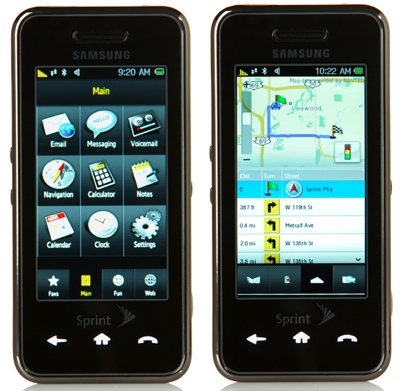
Samsung’s Instinct may be the best stab at the coveted title of iPhone killah this CTIA. The 3.1-inch touchscreen phone has localized haptic feedback, plus three hard navigation keys. If it sounds familiar, it’s because we’ve seen versions of it before, but only in Korea. Mind you, this is not the LG Prada-ripoff Samsung F480, which had a much smaller touchscreen.

The Instinct rocks EV-DO Rev A and GPS, in both cases besting what’s in the fruit phone. And then content and app wise, Sprint’s own wares are basically swapped in for Apple’s: Sprint Music Store, Navigation, TV, Visual Voicemail and a full HTML web browser—everything except a la carte music included in the $100 monthly subscription fee. EVERYTHING. On top of that, its customizable homescreen is amazing (and actually customizable, unlike other similar phones).


The Instinct will be available exclusively via Sprint (so don’t go looking for this phone over at Verizon) for now. Some of the more interesting features on the Samsung Instinct include:

  • “Voice to Action” button which provides functions using voice activation - including call, text, picture messaging, traffic, movie, and sports
  • Surf the web at broadband speeds
  • Support for Sprint Navigation with GPS enabled audio and visual turn-by-turn driving directions
  • Live Search powered by Microsoft - includes GPS enabled directions, interactive maps, and one-touch click to call access
  • Sprint TV
  • Sprint Exclusive Entertainment
  • Sprint Music Store
  • Pocket Express - up to date information on sports, weather, news, movies, and other options customized to the user’s zip code

Feeling a little geeky? Here are the technical specs to the phone:

  • CDMA EV-DO Rev A network support
  • Measures 4.57 x 2.17 x 0.49 inches and weighs 4.4 oz
  • 3.1 inch TFT LCD display with a resolution of 240 x 432. Also features haptic touch screen
  • 2 megapixel digital camera
  • Video recording and streaming with support for H.264 and MPEG4
  • Support for MP3, AAC, AAC+m, MIDI, QCP, and WMA
  • Bluetooth 2.0 with stereo Bluetooth profile support
  • WAP 2.0, XHTML, HTML, WML, WMLS capable browser
  • PictBridge support
  • Phonebook
  • 2 GB microSD memory card
  • USB Charging Cable
  • Two standard 1,000 mAh Lithium Ion Batteries
  • Each battery support 5.75 hours of talk time

The phone features three dedicated touch keys on the lower portion of the device to make using the phone extremely easy. The three keys are for phone, back, and home. The phone key takes you back to the phone features of course; the back key always lets you go back a step, and the home brings you access to the four menus of functionality which includes:

  • Favorites - one touch access to the things you do the most
  • Main - applications including Messaging, Voicemail, GPS Nav etc
  • Fun - Music, TV, photos, games, and more
  • Web - All things internet including weather and news


Read more...